Managing Multiple Properties? Smart Locks Make It Easier
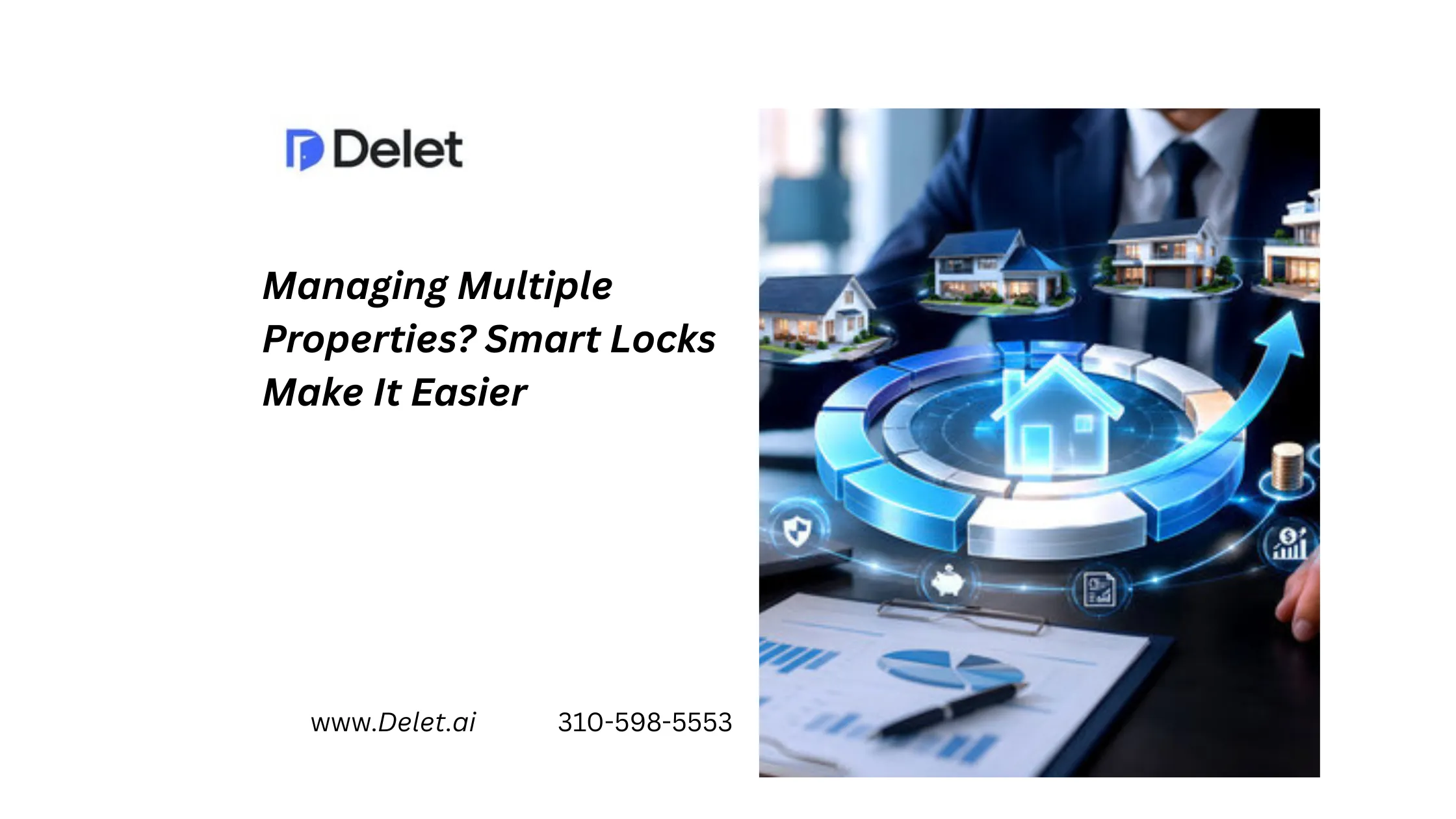
Managing one rental property is very different from managing dozens—or hundreds—of apartments across the United States. Every vacant unit can create another access task, showing request, key handoff, and follow-up for a property manager.
Smart locks can simplify that process by connecting property access with digital leasing workflows. For multifamily operators in California and across the USA, smart access technology can support self-guided apartment tours, temporary access, visitor verification, and remote monitoring without requiring staff to physically attend every showing.
The result is not simply a keyless door. It is a more connected way to manage multiple properties, vacant units, prospects, and leasing operations.
Why Smart Locks Matter When You Manage Multiple Properties
Traditional keys become increasingly difficult to manage as a portfolio grows.
Property teams may need to:
- Coordinate physical key handoffs
- Meet prospects for apartment showings
- Change locks after turnover
- Provide access to maintenance teams
- Track who entered a vacant unit
- Manage access across different properties
Smart locks replace many of these manual steps with digital access controls.
Modern systems can provide temporary credentials, remote access management, access logs, and integrations with property-management or touring software.
The Bigger Your Portfolio, the Bigger the Coordination Problem
Consider a California property manager overseeing 20 communities.
If every vacant apartment requires staff involvement for every showing, the workload grows with every additional unit.
Smart access changes the model:
Prospect books → identity is verified → temporary access is provided → prospect tours → access expires → activity can be reviewed.
That workflow can reduce repetitive coordination while maintaining greater control.
Smart Locks and Apartment Self Tours
One of the strongest applications for smart locks is the apartment self-tour.
Instead of requiring a leasing agent to unlock a vacant apartment, qualified prospects can receive controlled access during an approved tour window.
Platforms in this category commonly combine temporary access credentials with tour scheduling and identity verification. Rently, for example, describes time-restricted access, ID verification, and entry audit trails for self-guided tours.
For property managers, this can create more flexible touring opportunities without automatically increasing the number of staff required to conduct showings.
Smart Access Can Reduce Leasing Workload
Leasing teams spend time on more than closing leases.
They also handle:
- Scheduling
- Rescheduling
- Key coordination
- Access instructions
- Prospect check-ins
- Showing confirmations
- No-show management
- Property access questions
Automating parts of this process allows staff to spend more time on prospects who have already demonstrated interest.
This is an important distinction:
Smart locks do not replace leasing teams. They can remove repetitive access-related work from leasing teams.
That same principle is reflected across current smart-access solutions, which position automated access as a way to let property staff focus more on leasing and exceptions rather than routine showings.
Visitor Identity Verification Adds Another Layer of Control
Convenience alone is not enough for vacant properties.
Property managers need to know who is receiving access and when that access is being used.
Depending on the platform and configured workflow, visitor identity verification can require information such as contact details, government-issued identification, or selfie verification before access is granted.
This creates a more controlled process for self-guided touring.
For operators managing multiple properties, consistency matters because the same access policy can potentially be applied across multiple units rather than relying on different manual procedures at every location.
Real-Time Tour Monitoring for Greater Visibility
Self-guided does not have to mean unsupervised.
Connected systems can provide visibility into tour activity, access events, and—when supported by the property’s hardware—camera monitoring.
Delet combines apartment self-tour technology with smart locks, cameras, visitor verification, remote access, and leasing workflows, giving property teams a way to connect physical access with digital tour management.
This is particularly useful for vacant units where property managers want greater awareness without sending an employee to every showing.
Centralized Management Across Multiple Properties
A multi-property operation needs more than individual smart locks.
It needs centralized control.
A useful smart-access platform should make it easier to manage:
| Requirement | Why It Matters |
| Multiple properties | Avoid managing every location separately |
| Multiple units | Scale access as inventory grows |
| Temporary credentials | Limit access to approved periods |
| Visitor verification | Add another security checkpoint |
| Access activity | Understand who accessed a property |
| Tour scheduling | Connect access with showing appointments |
| Monitoring | Improve visibility into vacant-unit activity |
| Integrations | Connect access with existing workflows |
Some smart-lock platforms now offer centralized dashboards, role-based permissions, activity logs, and multi-property management.
How Smart Locks Can Help Reduce Empty-Vacancy Costs
Vacant apartments create an obvious financial problem: they generate expenses without producing rent.
The U.S. Census Bureau reported a 7.3% national rental vacancy rate in Q2 2026.
Smart locks cannot guarantee faster leasing. However, they can help remove one operational barrier: difficulty providing access to available units.
Property managers can use the Apartment Vacancy Cost Calculator to estimate how vacancy days and rental value affect their portfolio.
The more useful question is not simply:
“How much does my vacancy cost?”
It is:
“Which operational delays are contributing to unnecessary vacancy?”
Self-guided tours can address one part of that equation by making available units easier to tour.
A Simple Example
Imagine a property manager has:
- 100 rental units
- 8 vacant apartments
- Multiple properties across California
- Limited leasing staff
With traditional showings, staff may spend significant time traveling between properties and coordinating appointments.
With smart access and self-guided touring, qualified prospects may be able to access approved vacant units during scheduled tour windows.
The leasing team can then focus more heavily on:
- Following up with interested prospects
- Answering questions
- Processing applications
- Closing leases
The technology changes where staff time is spent, rather than eliminating the human part of leasing.
What to Look for in Smart Locks for Multiple Properties
Do not select a smart lock based only on the hardware.
Evaluate the complete operating system.
1. Portfolio Management
Can managers control multiple properties and units from one centralized environment?
2. Security
Look for controlled credentials, visitor verification, access logs, and appropriate permission levels.
3. Self-Tour Support
The lock should work with the touring workflow rather than operate as an isolated device.
4. Monitoring
If live HD camera monitoring is important to your operation, verify that the platform and hardware support it.
5. Integration
Check whether the solution can connect with your existing leasing, CRM, PMS, or touring processes.
6. Scalability
A solution that works for five units may not work efficiently for 500.
Common Smart-Lock Mistakes Property Managers Make
Choosing consumer hardware without considering portfolio management.
A single smart lock app is not necessarily a property-management solution.
Using shared access codes.
Individual, temporary credentials provide better control than one permanent code.
Ignoring connectivity requirements.
Vacant properties may have different internet and utility conditions. Some systems support offline or alternative access methods, while others depend on connectivity.
Treating access separately from leasing.
The greatest operational value comes when scheduling, verification, access, and tour activity work together.
Why Smart Locks Are More Than Keyless Entry
For a multi-property operator, smart locks should be viewed as part of a broader Smart Access Technology strategy.
The strongest workflow connects:
Prospect → Verification → Tour Scheduling → Smart Access → Apartment Self Tour → Monitoring → Leasing Follow-Up
That is where smart locks become more valuable.
Delet takes this approach by combining apartment self-tour hardware, software, visitor identity verification, smart access, monitoring, and leasing automation in one platform.
Conclusion
For property managers across California and the broader USA, managing multiple properties requires more than keeping track of keys.
Smart locks can connect physical property access with apartment self tours, visitor identity verification, monitoring, and leasing workflows.
When implemented as part of a complete property manager strategy, smart access technology can help teams reduce repetitive work, improve visibility, and provide prospects
with more flexible ways to tour available apartments.
Frequently Asked Questions
Are smart locks useful for property managers with multiple properties?
Yes. Smart locks can help centralize access management, provide temporary credentials, track access activity, and support self-guided tours across multiple properties.
Can smart locks support apartment self tours?
Yes. Smart locks can provide controlled, time-limited access during scheduled self-guided apartment tours.
How do smart locks reduce property management workload?
They can automate repetitive tasks such as key handoffs, temporary access, credential management, and some showing-related coordination.
Are smart locks secure for vacant apartments?
They can improve access control when combined with temporary credentials, identity verification, access logs, and appropriate monitoring. Security depends on the complete system configuration.
Can property managers monitor self-guided apartment tours remotely?
Depending on the hardware and software configuration, property teams can monitor tour activity, access events, and connected camera feeds remotely.
Can smart locks help reduce vacancy costs?
They cannot guarantee lower vacancy. However, by making apartment access easier and supporting more flexible self-guided tours, they may help reduce scheduling friction that can delay property tours.
What is the biggest benefit of smart locks for multiple properties?
The biggest operational benefit is centralized, controlled access management across multiple units and locations instead of relying entirely on physical keys and manual coordination.
September 18, 2026