How a Centralized Dashboard Can Simplify Multi-Property Leasing Operations
Managing one apartment property is challenging enough. Managing several properties, buildings, and vacant units can quickly turn into a daily exercise in switching between spreadsheets, emails, calendars, access systems, and leasing tools.
A centralized dashboard for property management can bring those workflows together.
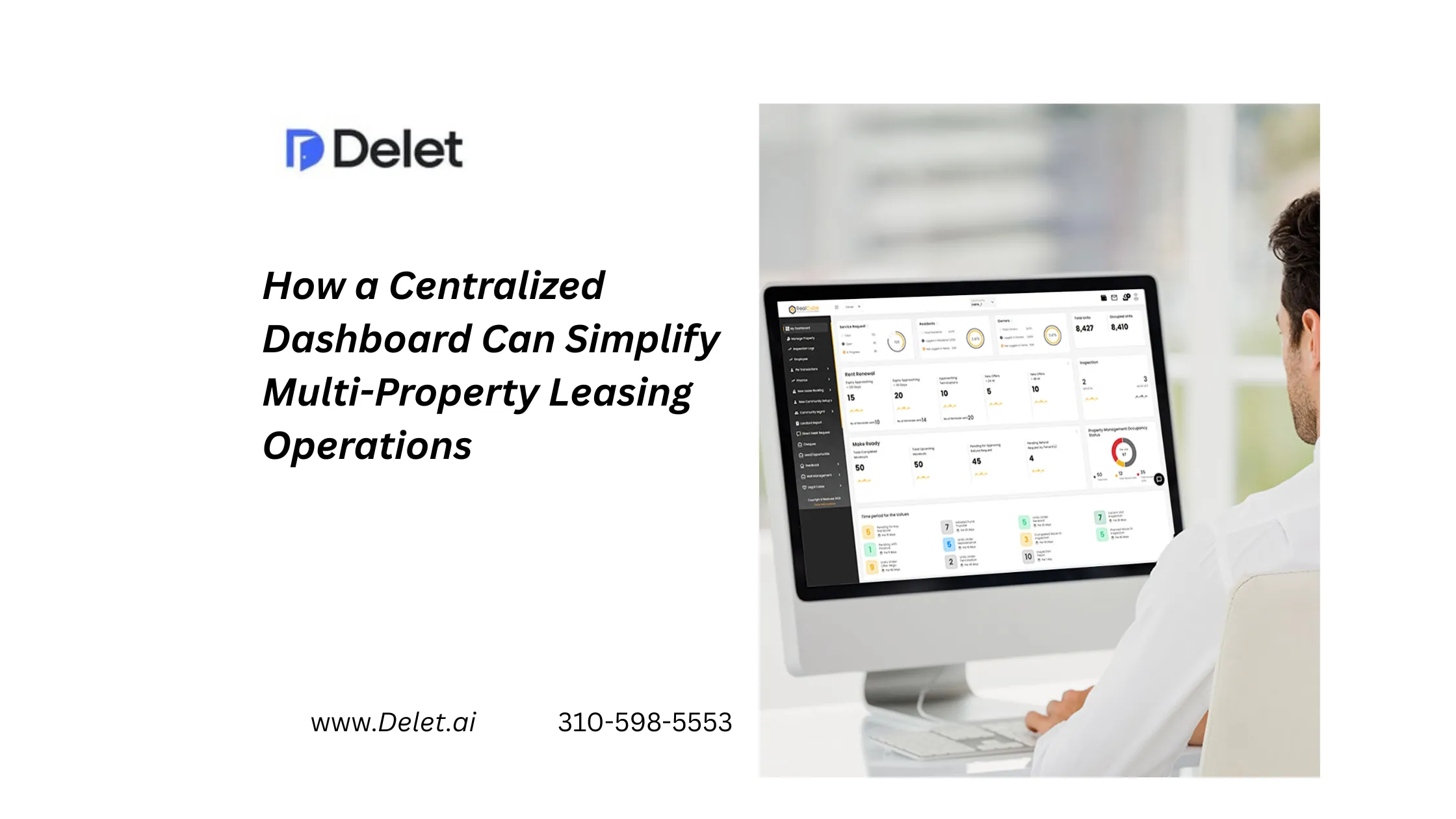
For U.S. multifamily operators, including property managers in California, the value is not simply having another software dashboard. The real benefit is having one place to understand what is happening across properties—and quickly drill down to the unit, prospect, tour, or access event that needs attention.
What Is a Centralized Property Management Dashboard?
A centralized dashboard for property managers with a single view of information and activities across multiple properties.
Depending on the platform, it may bring together:
- Properties and units
- Leasing leads
- Self Guided Tour schedules
- Visitor verification
- Smart access
- Tour activity
- Maintenance
- Occupancy information
- Lead Tracking
- Performance reporting
- Team workflows
Multi-property software commonly uses portfolio-level dashboards to let managers move from an overall portfolio view into individual properties and units.
For leasing teams, however, the dashboard should go beyond financial and maintenance information.
It should also help answer:
Who is touring? Which unit are they touring? When is the tour scheduled? Has the visitor checked in? Is access working? What happened after the tour?
Why Multi-Property Leasing Becomes Difficult to Manage
As a portfolio grows, operational complexity grows with it.
A manager might have:
Property A → 50 units
Property B → 120 units
Property C → 200 units
Each property may have different vacancies, leasing agents, access devices, scheduled tours, and prospects.
Without centralized visibility, managers can end up checking several systems just to answer one question.
This creates three common problems:
- Fragmented information
- Repetitive administrative work
- Delayed decisions
A centralized dashboard is designed to reduce that friction.
How a Centralized Dashboard Simplifies Multi-Property Leasing
1. See Portfolio Activity From One Place
The first advantage is visibility.
Instead of opening individual property systems, managers can start with a portfolio-level view and identify which properties need attention.
For example:
| Dashboard View | What the Manager Can See |
| Portfolio | Overall leasing activity |
| Property | Activity at a specific community |
| Unit | Status of an individual apartment |
| Lead | Prospect and tour information |
| Tour | Scheduled or completed activity |
| Access | Relevant smart-lock activity |
| Monitoring | Available tour visibility |
This portfolio-to-unit approach is increasingly common in multi-property management software.
2. Manage Apartment Self-Tours More Efficiently
Self-guided apartment tours introduce several connected processes.
A prospect needs to schedule a tour, complete required verification, receive access, enter the property, and complete the tour.
The property team may also need visibility into the tour.
A centralized platform can connect these steps instead of treating them as separate tasks.
Delet’s platform combines apartment self-tours with visitor verification, smart access, live camera monitoring, and leasing workflows.
3. Connect Visitor Identity Verification With Access
Security should not be separated from leasing operations.
A centralized workflow can help property teams connect visitor verification with controlled property access.
Depending on the configured system, a prospect may complete verification before receiving authorized access to the apartment.
This creates a more structured process:
Lead → Verification → Approved Tour → Controlled Access → Tour → Follow-Up
That is more useful than simply giving someone a smart-lock code.
4. Monitor Tours Without Being On-Site
Multi-property managers cannot physically stand at every property.
Real-time tour monitoring can give authorized teams greater visibility into activity at vacant properties.
Delet promotes live HD camera monitoring and remote access controls as part of its self-tour platform.
This can be particularly valuable when a California property manager is responsible for properties across different cities or regions.
Self-guided does not have to mean unmanaged.
5. Reduce Switching Between Systems
One of the biggest hidden costs of fragmented software is context switching.
A manager may move between:
- CRM
- Property management system
- Calendar
- Smart-lock platform
- Camera system
- Spreadsheet
The issue is not necessarily that any one system is bad.
The problem is that important information becomes distributed.
A centralized dashboard reduces the number of places managers need to check before making a decision.
Centralized Dashboard vs. Multiple Disconnected Tools
| Area | Disconnected Tools | Centralized Approach |
| Property information | Multiple locations | One portfolio view |
| Tour scheduling | Separate calendar/system | Centralized workflow |
| Visitor verification | Separate process | Connected to touring |
| Smart access | Separate hardware dashboard | Connected to tour workflow |
| Monitoring | Separate camera system | Centralized visibility |
| Leads | CRM or spreadsheets | Connected lead workflow |
| Reporting | Manual consolidation | Portfolio-level reporting |
The objective is not necessarily to replace every existing system.
Instead, managers should look for integration and connected workflows.
What Should a Multi-Property Leasing Dashboard Include?
A strong dashboard should make important information easy to find.
Essential capabilities
Portfolio management
- Multiple properties
- Multiple buildings
- Multiple units
- Property-level permissions
Leasing
- Lead tracking
- Tour scheduling
- Tour status
- Follow-up activity
Security
- Visitor identity verification
- Smart lock integration
- Controlled access
Monitoring
- Tour status
- Live monitoring where configured
- Access activity
- Device status
Analytics
- Tour volume
- Completed tours
- No-shows
- Lead activity
- Property-level comparisons
Rently, for example, describes a manager platform that can manage tours, tenants, and devices across properties and provides real-time tour data and device performance information.
A Practical Example for a Multifamily Operator
Imagine a property manager oversees five apartment communities in California.
One property has three vacant units generating multiple inquiries.
Instead of calling the leasing agent to determine whether someone is touring, the manager can use the centralized dashboard to review:
- Today’s scheduled tours
- Verification status
- Tour status
- Unit information
- Access activity
- Available monitoring
- Lead information
If something requires attention, the manager can focus on that specific property or unit.
That is the real value of centralization: less searching, more decision-making.
How This Can Help Reduce Vacancy Friction
A vacant apartment is not just an operational issue. It can represent lost rental income.
Property managers can use Delet’s Apartment Vacancy Cost Calculator to estimate the potential financial impact of vacancy.
This is especially useful when evaluating whether additional tour availability, faster lead response, or reduced showing friction could justify technology investment.
Common Mistakes When Choosing a Dashboard
Choosing a dashboard that only displays information
A dashboard should ideally help managers take action, not simply look at numbers.
Ignoring integrations
If the dashboard cannot connect to the tools your team already uses, it may create another silo.
Focusing only on accounting
Financial visibility matters, but leasing operations also need visibility into leads, tours, access, and prospect activity.
Forgetting portfolio scalability
A system that works for two properties may not work as well for twenty.
Ask how the platform handles:
- Additional properties
- Additional users
- Multiple locations
- Permissions
- Hardware
- Reporting
- Integrations
Expert Insight: The Best Dashboard Follows the Leasing Workflow
The most useful dashboard is not necessarily the one with the most charts.
It is the one that follows how property managers actually work.
For apartment leasing, that workflow often looks like:
Lead → Tour → Verification → Access → Monitoring → Follow-Up → Lease
Technology becomes more valuable when those steps are connected rather than isolated.
Related blog: TDI Properties Success Story: How Apartment Self Tours Reduced Vacancy Days by 40%
Conclusion
A centralized dashboard for property management can simplify multi-property leasing operations by bringing property information, leads, tours, smart access, visitor verification, monitoring, and reporting into a more connected workflow.
For U.S. multifamily operators and property managers in California, this can provide greater visibility across a growing portfolio without requiring managers to constantly switch between disconnected tools.
Delet takes this approach specifically into apartment leasing by combining self-guided tours, smart locks, visitor identity verification, real-time monitoring, and centralized property management capabilities.
The goal is straightforward: give property managers one clearer view of the leasing operation so they can spend less time coordinating systems and more time managing properties and converting prospects.
Frequently Asked Questions
What is a centralized dashboard for property management?
It is a software interface that brings information and workflows from multiple properties, units, and operational systems into one place.
Can a centralized dashboard manage multiple properties?
Yes. Multi-property platforms can provide portfolio-level visibility while allowing managers to drill down into individual properties and units.
Can a centralized dashboard manage apartment self-tours?
Depending on the platform, it can connect tour scheduling, visitor verification, smart access, tour status, and monitoring.
Can property managers monitor self-guided tours remotely?
Yes, when the platform includes compatible monitoring hardware and remote-access capabilities. Delet supports live camera monitoring and remote access as part of its self-tour platform.
Does a centralized dashboard replace a property management system?
Not necessarily. It may complement an existing PMS or CRM through integrations. The right setup depends on the operator’s existing technology stack.
How does centralization help property managers save time?
It reduces the need to search through multiple systems for property, lead, tour, access, and operational information.
September 25, 2026