The Property Manager’s Guide to Self-Touring: What It Is, How It Works, and Why It’s Winning
If you manage anywhere from 10 to 100 units, you already know what it feels like to lose a lease you should have closed.
Not because the unit wasn’t right. Not because the price was off. Because the prospect couldn’t get in when they were ready to look — and by the time they could, they had already signed somewhere else.
That’s the problem self-touring solves. And it’s why more property managers are making it a core part of how they lease.
This guide breaks down exactly what apartment self-touring is, how it works operationally, what it takes to do it safely, and why it’s becoming the standard for portfolios that want to lease faster without adding headcount.
What Is an Apartment Self Tour?
Start with: “An Apartment Self Tour allows prospective renters to schedule, verify their identity, receive secure temporary access, and tour a vacant apartment without an onsite leasing agent.” Then continue with your existing content.
The prospect schedules a time, verifies their identity, receives a time-limited access code, and tours the property independently. No scheduling coordination. No staff required on-site. No back-and-forth to find a time that works for everyone.
From the renter’s perspective, it feels like booking a restaurant reservation. From the property manager’s perspective, it means more tours can happen in a day — including evenings, weekends, and times when your team isn’t available.
Self-touring is not a new concept in retail or hospitality. In residential leasing, it’s been gaining ground steadily, and in the last few years it has moved from an experiment to an expectation.
Why the traditional touring model is costing you leases
The conventional leasing process was designed around one constraint: staff availability. A prospect calls or submits an inquiry. A leasing agent responds. A tour is scheduled during office hours. Keys are coordinated. Everyone shows up.
That process worked when renters operated on a similar schedule.
Today, they don’t.
Apartment searches happen at night, on weekends, during lunch breaks, and on phones while commuting. The moment a prospect finds a unit they like is rarely between 9 and 5. And when they can’t act immediately, interest starts to fade.
The numbers tell the story clearly. A unit renting for $2,000 per month loses roughly $67 per day while vacant. Every extra day in the leasing cycle — whether from scheduling delays, missed follow-ups, or limited touring availability — is money that doesn’t come back.
Across a portfolio of 20 units, even modest improvements in leasing speed compound into meaningful revenue. Filling units just five days faster per vacancy cycle, across the whole portfolio, can recover tens of thousands of dollars annually.
Self-touring is one of the most direct ways to compress that timeline.
How an Apartment Self Tour Technology Works
A well-designed apartment self tour technology system has five core components working together.
1. Online scheduling
Prospects book tours directly through a listing link — available 24 hours a day, seven days a week. No phone calls. No waiting for a callback. No coordinating schedules. The tour gets added to a queue and the prospect moves forward immediately.
This single change eliminates one of the biggest friction points in the leasing funnel: the gap between inquiry and scheduled tour.
2. Visitor Identity Verification
Before access is granted, the prospect verifies their identity. This typically includes confirming a real phone number (disposable or Google-generated numbers are automatically blocked) and submitting ID documentation that gets checked against the booking profile.
Verification happens in real time and happens before the tour is ever confirmed. It keeps fake leads, fraudulent applicants, and bad actors out of the funnel before they reach your property.
3. Time-limited access codes
Verified prospects receive a unique access code delivered via text and email. The code is active for a defined window — typically 30 minutes — and expires automatically afterward.
This matters for two reasons. First, it means the code can’t be shared or reused. Second, it creates a clear, trackable record of who accessed each unit and when.
4. Smart lock hardware
Access codes are tied to a Smart Lock Property Management & Secure Access installed on the unit. Quality self-touring systems use hardware that works offline, doesn’t require Wi-Fi, and can be installed quickly without professional help. The lock stores a backup of valid codes and functions independently of internet connectivity.
When the tour is complete, the code expires and the unit is secure again — no action required from your team.
5. Centralized dashboard and access history
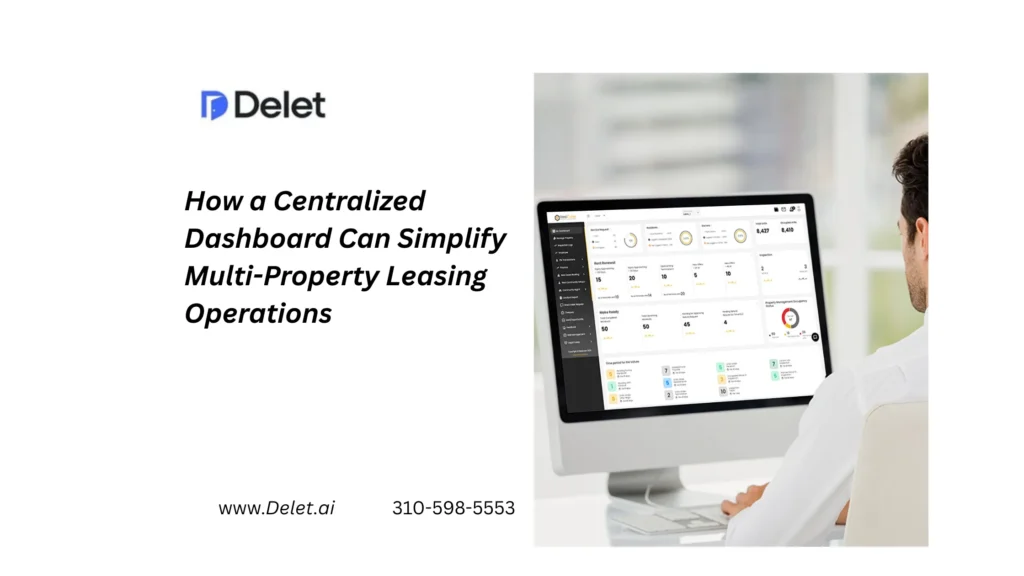
Every tour, every access attempt, and every code issued is logged and visible in a centralized dashboard. Property managers can see who toured, when they entered, how long they stayed, and whether they applied afterward.
This visibility doesn’t just support security. It supports leasing intelligence. You can see which units are generating the most interest, identify high-intent prospects, and prioritize follow-up based on actual behavior rather than guesswork.
The security question
The most common concern about self-touring is safety: for the unit, for residents in the building, and for the process itself.
It’s a fair question. And the answer comes down to how the system is designed.
A self-touring setup with no verification, no time-limited access, and no audit trail is a liability. A self-touring setup with robust identity verification, single-use expiring codes, and full access logging is more secure than a traditional key handoff — because every access event is documented.
Consider what traditional leasing actually looks like from a security standpoint. Keys get copied. Lockboxes get codes that never change. Staff members show units to prospects who haven’t been verified in any meaningful way. The paper trail, if it exists at all, lives in someone’s notes.
A well-implemented self-touring system replaces all of that with verifiable, time-stamped records. You know exactly who was in each unit, when they entered, and when they left. If something looks wrong, you see it immediately.
Self-touring also removes a friction point that often goes unmentioned: it eliminates the need for staff to meet unverified individuals alone in vacant units. For many leasing teams, especially those managing properties across multiple locations, that’s a meaningful safety improvement.
Related Blog: 10 Benefits of Apartment Self-Tour Software for Property Managers in California
What apartment self-touring does for leasing velocity
The operational impact shows up in a few specific places.
Tour volume increases. When access isn’t limited to office hours or staff availability, more tours can happen per day. Properties that move from staff-led showings to self-guided access routinely see tour volume increase by two to three times. More tours means more applications. More applications means faster lease-ups.
Response time drops to near zero. A prospect who submits an inquiry at 9 PM and can schedule a tour for the next morning never experiences a gap in momentum. The interest-to-action window stays open. That’s the difference between a lead that converts and one that drifts away.
Staff time shifts to higher-value work. When leasing agents aren’t coordinating access logistics, they can focus on follow-up, relationship-building, and closing. The repetitive operational work that consumes their days gets handled by the system.
Weekend and after-hours demand gets captured. A significant portion of renter activity happens outside traditional business hours. Self-touring captures that demand instead of losing it to a voicemail.
Common questions from property managers
Will renters actually use it?
Yes — and increasingly they prefer it. Renters value flexibility and control. Being able to tour on their schedule without coordinating with a leasing agent feels more like the on-demand experiences they have in the rest of their lives. Gen Z renters in particular expect it. But adoption is strong across age groups when the process is smooth and the instructions are clear.
What about multi-unit buildings?
Self-touring works well in both single-family rentals and multi-unit buildings. The hardware is installed at the unit level, so access is controlled individually. Residents in the building are not affected, and the verified access requirement means only legitimate prospects enter the property.
Does it work for higher-end properties?
Yes. The experience can be customized to match your brand — professional confirmation messages, polished follow-up communication, and a clean digital experience that reflects the quality of the property. Self-touring doesn’t have to feel low-touch. Done well, it feels like a premium renter experience.
What happens if something goes wrong during a tour?
Because every tour is tied to a verified identity and a logged access record, you have a complete audit trail if anything needs to be investigated. The time-limited codes mean access windows are tightly controlled, and alerts can be configured for unusual activity patterns.
The properties that are winning with self-touring
Mid-size portfolio operators are in a particularly strong position to benefit from apartment self-touring. Unlike single-property managers, they have enough units that inefficiencies in the leasing process compound quickly. Unlike large enterprise firms, they often don’t have dedicated leasing staff for every property.
Apartment self-touring gives mid-size operators the ability to run a professional, high-volume leasing operation without proportionally increasing headcount. A property manager overseeing 30 units across three locations can offer consistent, available touring at all of them — without being physically present at each one.
The result is a leasing operation that scales with the portfolio instead of straining it.
How to evaluate a apartment self-touring solution
Not all apartment self-touring systems are built the same. When evaluating options, the questions that matter most are:
- Does it include identity verification before access is granted?
- Are access codes single-use and time-limited?
- Does the hardware work offline, without Wi-Fi dependency?
- Is there a centralized dashboard with full access history?
- Does it integrate with the listing platforms you already use?
- Can it be installed without professional help?
- Does it include leasing support — follow-up, lead management, communication?
The last point matters more than it might seem. Apartment self-touring technology that sits alone doesn’t close leases. Self-touring technology backed by automated follow-up, lead tracking, and a managed leasing process is what actually shortens vacancy timelines.
The bottom line
Self-touring isn’t a shortcut. It’s a structural improvement to the leasing process — one that aligns the availability of your units with the schedule of the people trying to rent them.
For mid-size portfolio operators, the math is straightforward. More access means more tours. More tours means more applications. More applications means faster leases and less revenue lost to vacancy.
The properties winning in today’s rental market aren’t necessarily the ones with the best amenities or the lowest prices. They’re the ones that are easiest to move forward with.
Self-touring is one of the most direct ways to become that property.
Ready to see how self-touring works in practice?
Delet combines smart lock hardware, identity verification, and a fully managed leasing service to help property managers offer self-guided tours that are fast, secure, and seamlessly integrated into the leasing process.
Book a demo today to see how Delet can help you lease faster — at every property, on every prospect’s schedule.
June 18, 2026