Smart Lock Property Management: How to Secure Access, Reduce Staff Workload, and Improve Apartment Leasing
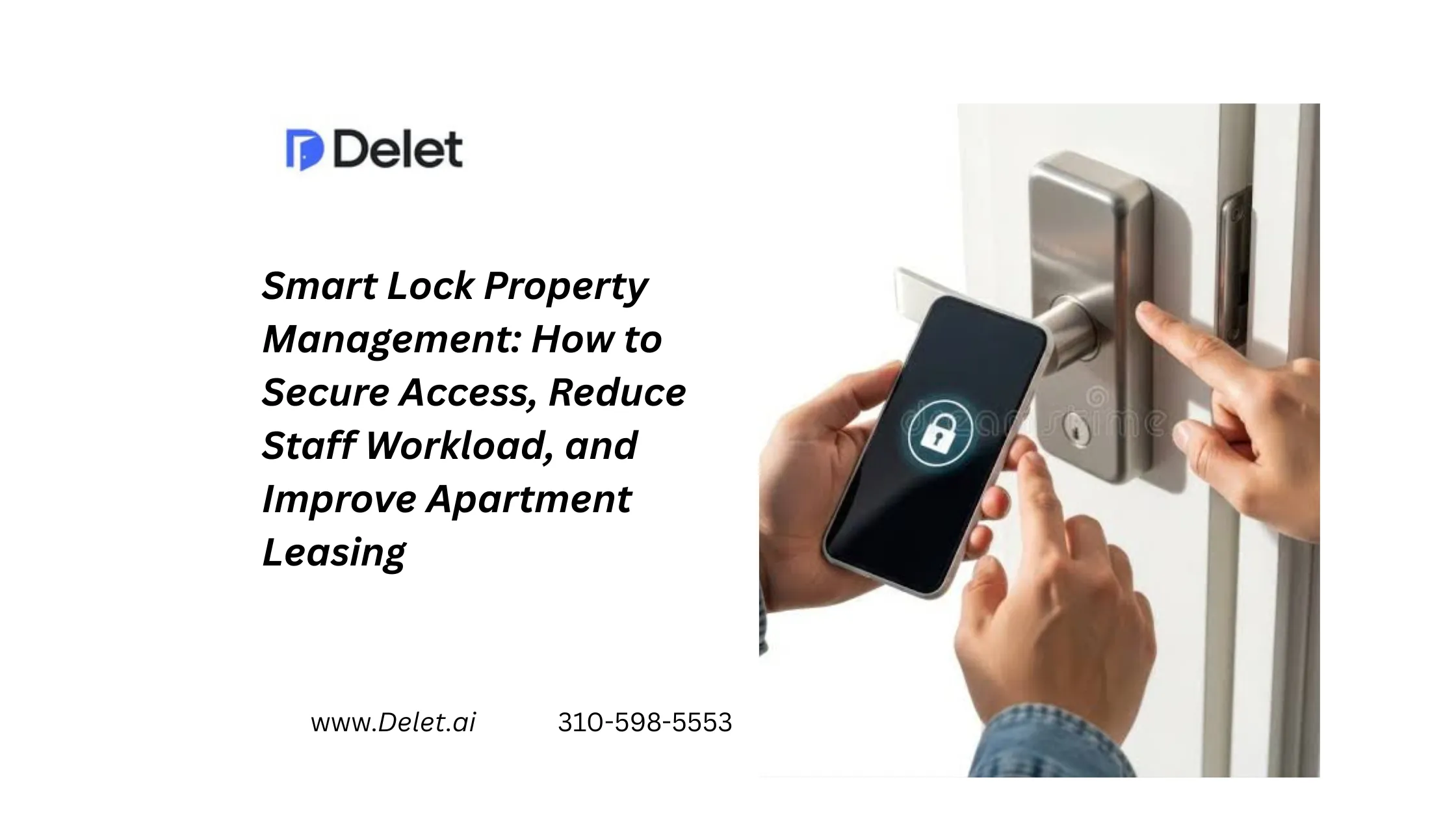
Smart Lock Property Management Is Becoming a Leasing Strategy
For property managers, a smart lock is no longer just a replacement for a metal key.
In modern U.S. multifamily housing, smart lock property management can connect physical access with apartment self tours, visitor identity verification, automated scheduling, and real-time monitoring.
That matters because leasing teams are under pressure to respond quickly while managing more tasks with limited staff time.
A prospect may want to tour an apartment after work. A vendor may need temporary access. A resident may need a digital credential. A leasing agent may need to remotely unlock a door.
A traditional key system makes each situation a manual task.
A connected access system can turn many of those tasks into controlled digital workflows.
What Is Smart Lock Property Management?
Smart lock property management refers to using connected digital locks and access-control technology to manage who can enter a property, when they can enter, and what access they receive.
Depending on the system, property managers can manage:
- Apartment doors
- Building entrances
- Common areas
- Vendor access
- Staff access
- Self-guided tours
- Temporary visitor credentials
- Resident access
Modern platforms can also connect smart locks with property management and leasing systems, creating a centralized view instead of forcing teams to manage access manually. Rently, for example, describes portfolio-wide access management spanning entrances, common areas, unit doors, and self-guided tours.
Why Property Managers Are Moving Beyond Traditional Keys
Traditional keys create an operational problem: someone has to control them.
Keys can be:
- Lost
- Duplicated
- Misplaced
- Returned late
- Shared between employees
- Difficult to track
Smart access changes the model.
Instead of asking, “Who has the key?”, the property team can ask, “Who is authorized to enter, and for how long?”
That is a much more useful question for a modern multifamily operation.
Smart Lock Property Management and Apartment Self Tours
One of the strongest use cases is the apartment self tour.
A prospect can request a tour, complete required verification, receive time-limited access, and enter the property without requiring a leasing employee to physically meet them.
Tour24 describes a similar workflow in which prospects register, schedule, complete verification, and use smart-lock access during a self-guided tour.
This creates an important operational separation:
Apartment access no longer has to be completely dependent on leasing-staff availability.
That can expand potential showing availability while allowing staff to concentrate on higher-value conversations and applications.
The Five-Part Smart Access Workflow
A strong property-management system should connect more than the lock itself.
| Stage | Technology | Property Manager Benefit |
| Prospect request | Automated scheduling | Less calendar coordination |
| Identity verification | Digital verification | Greater visitor accountability |
| Access | Smart lock integration | Controlled entry |
| Tour | Monitoring and activity logs | Better visibility |
| Follow-up | Leasing automation | Faster prospect engagement |
The real value comes from connecting these stages.
A smart lock operating independently is useful.
A smart lock connected to the leasing workflow is considerably more powerful.
Visitor Identity Verification Matters
Convenience should never mean uncontrolled access.
Before granting a prospect access to a vacant apartment, property managers should consider how the platform verifies the visitor.
Modern self-tour systems can incorporate identity verification and screening before access is granted. Rently and ShowMojo both describe verification as part of their self-showing workflows.
This is increasingly relevant because rental fraud can involve copied listings and fraudulent property representatives. The FTC specifically warns that scammers may copy legitimate rental listings and even use self-guided tours to make fake listings appear legitimate.
For operators, that means verification should be treated as part of the access strategy, not an optional add-on.
Real-Time Tour Monitoring Adds Another Layer
Self-guided does not have to mean invisible.
A stronger system can provide visibility into:
- Who accessed a unit
- When access occurred
- Whether the tour started
- Access duration
- Entry events
- Potential access exceptions
- Camera activity, where supported
Some platforms also offer real-time monitoring and access logs. ShowMojo, for example, promotes controlled access, remote management, verification, and reporting within its leasing workflow.
For larger multifamily portfolios, this visibility can make remote management much easier.
Related blog: The All-in-One Leasing Platform: Connecting Tours, Access, and Automation
Smart Locks Can Reduce Repetitive Staff Work
Consider a leasing employee managing several vacant apartments.
Without digital access, the employee may need to:
- Receive a tour request.
- Check availability.
- Coordinate a time.
- Locate a key.
- Meet the prospect.
- Unlock the unit.
- Retrieve the key afterward.
- Update the prospect record.
- Follow up.
Now multiply that workflow across dozens of tours.
Smart access can automate or simplify several of those steps.
The objective isn’t to eliminate leasing professionals.
It’s to eliminate repetitive access-related work so employees can spend more time on work that requires judgment and human interaction.
ShowMojo positions its smart-access products specifically around eliminating key exchanges and on-site coordination.
Centralized Property Dashboards Become More Important at Scale
Managing one smart lock is relatively simple.
Managing hundreds of access points is different.
A multifamily operator may need visibility across:
- Multiple buildings
- Multiple communities
- Vacant units
- Model units
- Common areas
- Vendor access
- Staff credentials
That is where a centralized property dashboard becomes valuable.
Portfolio-level visibility allows managers to control access policies and review activity without treating every property as a separate operation.
Smart Lock Integration Should Be Part of a Larger Technology Stack
Before purchasing a solution, property managers should examine how it fits with existing systems.
Look for compatibility with:
- Property management software
- CRM platforms
- Leasing systems
- Identity verification
- Smart locks
- Access panels
- Cameras
- Reporting systems
Rently highlights PMS and CRM integrations as part of its portfolio workflow, while Tour24 emphasizes integration with existing technology stacks.
The best system is not necessarily the one with the most features.
It is the one that removes the most manual work from your existing process.
What Should Property Managers Look for in Smart Lock Technology?
Before making a purchase, evaluate these areas:
Security
Ask how credentials are created, limited, revoked, and logged.
Verification
Understand how prospects are identified before access.
Hardware
Confirm compatibility with existing doors, locks, access panels, and community infrastructure.
Reliability
Ask what happens when internet connectivity, batteries, or devices fail.
Portfolio Management
Determine whether one dashboard can manage multiple communities.
Reporting
Look for access history, tour activity, exceptions, and performance reporting.
Integrations
Confirm compatibility with your PMS, CRM, and leasing workflow.
Support
Understand installation, maintenance, troubleshooting, and customer support responsibilities.
Common Smart Lock Property Management Mistakes
Treating the Lock as the Entire Solution
A smart lock solves physical access. It does not automatically solve scheduling, verification, leasing follow-up, or reporting.
Ignoring Emergency Access
Every implementation needs a clear procedure for emergencies, device failure, power issues, and authorized staff access.
Choosing Hardware Before Understanding the Workflow
Start with the operational problem, then select the technology.
Forgetting the Renter Experience
Access should feel simple to the renter.
Complicated apps, unclear instructions, or unreliable credentials can create friction at exactly the moment when a prospect is evaluating the property.
Smart Locks Can Become a Leasing Advantage
The strongest reason to adopt smart access isn’t technology for its own sake.
It is availability.
A property that can securely accommodate more tour opportunities has more chances to put prospects inside its units.
Rently reports that 83% of renters want to self-tour and 53% prefer after-hours or weekend tours; these are company-reported figures, so operators should validate such claims against their own prospect data.
The broader lesson is more important than any single vendor statistic:
If prospects want flexibility and your leasing process cannot provide it, access becomes a competitive disadvantage.
Smart Lock Property Management: Best Practices
For U.S. multifamily operators, a practical implementation approach is:
- Identify where physical keys create delays.
- Identify which units are suitable for self-tours.
- Establish visitor verification requirements.
- Select compatible smart-lock hardware.
- Connect access with scheduling.
- Define emergency and exception procedures.
- Train leasing staff.
- Test the renter journey.
- Monitor tour and access data.
- Expand only after the pilot performs reliably.
How to Measure the Business Impact
Don’t measure success by the number of locks installed.
Track:
| KPI | Why It Matters |
| Inquiry-to-tour time | Measures leasing responsiveness |
| Tours scheduled | Measures access to inventory |
| Tour completion rate | Measures process quality |
| Staff hours per tour | Measures workload reduction |
| No-show rate | Measures scheduling quality |
| Tour-to-application rate | Measures prospect quality |
| Tour-to-lease rate | Measures leasing effectiveness |
| Days on market | Measures vacancy impact |
This turns smart access from a technology expense into a measurable operational initiative.
What Competitors Often Miss
Many smart-access and self-tour platforms emphasize convenience, hardware, or automation.
The bigger opportunity is to connect security + access + leasing operations + prospect experience.
That is the distinction property managers should look for.
The question isn’t:
“Which smart lock should we buy?”
It is:
“How can we create a secure access system that removes friction from the entire leasing journey?”
That shift in thinking can produce a much stronger technology strategy.
Conclusion
Smart lock property management is becoming more than a keyless-entry solution for U.S. property managers.
When connected with apartment self tours, visitor identity verification, smart access technology, real-time tour monitoring, centralized dashboards, and leasing software, digital access can help properties become easier to tour while reducing repetitive staff responsibilities.
The strongest implementation balances three priorities:
Security. Convenience. Operational control.
For California and other U.S. multifamily markets, that balance is increasingly important as operators compete for renter attention while managing staffing and operational costs.
A smart lock alone won’t transform leasing.
But smart access integrated into the right workflow can help property managers spend less time managing keys and more time managing the business.
FAQs
Frequently Asked Questions
What is smart lock property management?
Smart lock property management uses connected digital locks and access-control technology to manage property entry, temporary credentials, residents, staff, vendors, and self-guided tours.
How do smart locks help apartment leasing?
They can reduce physical key exchanges and make it easier to provide controlled access for qualified prospects during self-guided apartment tours.
Are smart locks secure for self-guided apartment tours?
They can provide controlled, time-limited access and activity records. Security depends on the complete system, including verification, credential management, hardware, monitoring, and property procedures.
Can smart locks work with property management software?
Yes. Many modern platforms support integrations with PMS, CRM, leasing, and access-control systems. Compatibility should be confirmed before implementation.
Do smart locks eliminate the need for leasing agents?
No. They primarily reduce repetitive access and coordination work, allowing leasing teams to focus more on prospects, applications, follow-up, and resident relationships.
Can smart locks support after-hours apartment tours?
Depending on the property’s policies and technology configuration, smart access can support controlled tours outside traditional leasing-office hours. Rently and Tour24 both position flexible or after-hours touring as a core use case.
What should property managers consider before installing smart locks?
Evaluate security, visitor verification, hardware compatibility, integrations, reliability, emergency procedures, reporting, portfolio management, installation, and ongoing support.
September 9, 2026