Stop Rekeying Between Tenants: The Case for Permanent Smart Locks
Why do you need the headache of rekeying
Oct 21, 2026 · @Tara
Every turnover has a checklist: paint, clean, inspect, and call the locksmith. Rekeying is so routine that most property managers never question it. They just budget for it and wait for the appointment. But what about smart locks?
But rekeying is a fix for a problem physical keys created. When the old resident turns in two keys, you have no idea how many copies are still out there. Changing the cylinder is the only way to be sure.
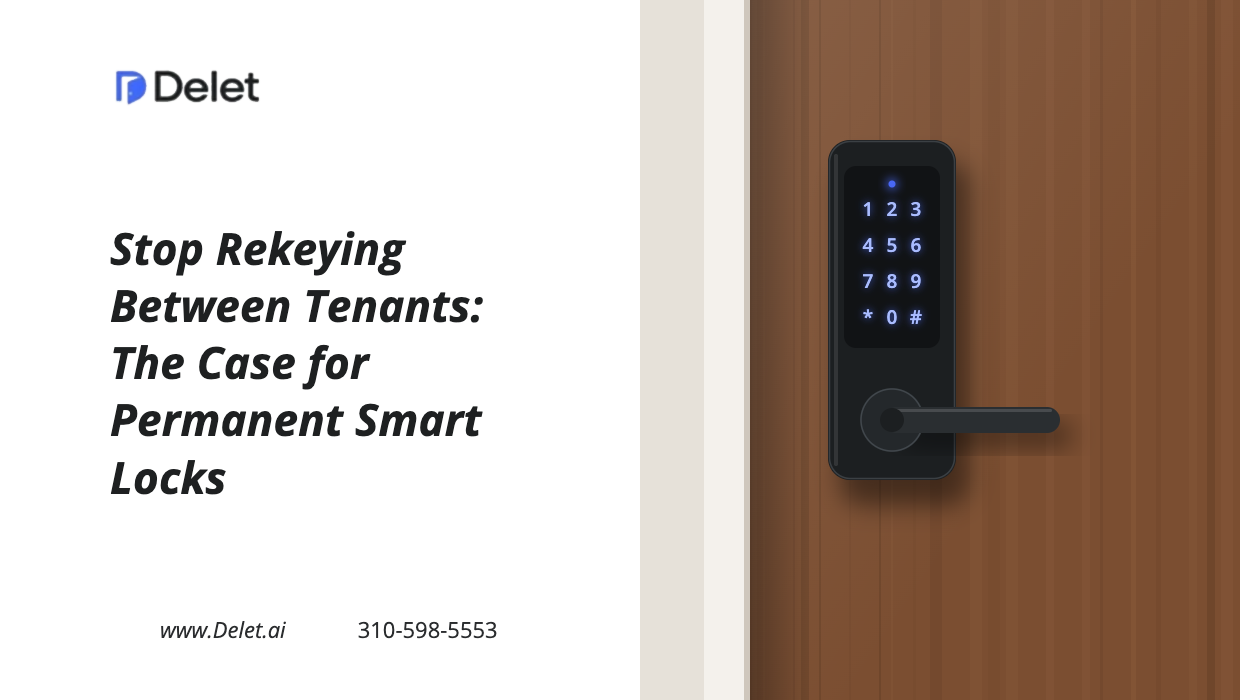
A permanent smart lock removes that problem entirely. There are no keys to copy, so there’s nothing to rekey. Access changes in software, in minutes, at no cost per turnover.
The real cost of rekeying
The locksmith invoice is the cost you see. It’s rarely the biggest one.
- Per-turnover fees. Every move-out means another service call. Multiply that by your annual turnover across the portfolio, and it adds up to a recurring line item that never goes away.
- Scheduling drag. The unit can’t be marked rent-ready until the lock is done. One missed locksmith appointment can push a move-in back by days, and every day vacant is rent you don’t collect.
- Key management. Someone has to cut, label, store, hand off, and chase down keys for residents, vendors, and maintenance. Lost keys mean more rekeys.
- Leftover risk. Rekeying protects you from the last resident’s copies. It does nothing about the copies made by the next one.
For a portfolio of 50 units with normal turnover, that’s dozens of lock jobs a year, each one a small delay sitting on your critical path to lease.
What changes with a permanent smart lock
A permanent smart lock with a digital keypad stays on the door for the life of the unit. Instead of swapping hardware between residents, you swap codes.
When a resident moves out, their code is deleted. When the next one moves in, they get a new one. The turnover step that used to require a vendor visit now takes a few clicks in your leasing software.
That changes the math. The lock is a one-time purchase, not a recurring service. And because the codes are managed centrally, your team controls access from the office instead of driving to the property.
A Class A feel for Class C units
Keyless entry used to be a luxury-building amenity. Renters notice it the first time they walk up to the door.
Adding a permanent keypad lock is one of the few upgrades that improves security and resident experience at the same time, without a renovation budget. Residents never get locked out because they forgot their keys. You never wonder who still has a copy.
For older Class B and C properties competing on value, that’s a visible upgrade that helps a listing stand out and gives residents one more reason to renew.
One lock for the whole unit lifecycle
The biggest payoff comes from using the same lock at every stage of the unit, not just at move-in.
- Vacant. Vendors and maintenance get their own codes for set windows. No lockbox, no key handoff, no waiting for someone to let them in.
- Showing. Prospects self-tour with time-limited access codes. Your unit is available to show on evenings and weekends, when renters actually look.
- Move-in. The new resident gets their code on lease signing. No key pickup appointment.
- Residency. Maintenance access is scheduled by code, and residents never need a lockout call.
- Move-out. Delete the code. The unit is secure again, and the next showing can start the same day.
That last step is where rekeying disappears. The lock never leaves the door, so turnover stops waiting on hardware.
Common questions from property managers
Is a keypad lock as secure as a rekeyed deadbolt? A freshly rekeyed deadbolt is only as secure as the next set of keys you hand out. With a keypad, no physical copies exist, and you can revoke any code instantly.
What happens to a resident’s code at move-out? You delete it. Their access ends the moment you do, with no hardware change and no vendor visit.
Do I have to replace my lock kits for showings? No. Lock kits still make sense for units you want to move between properties. Permanent locks make sense for units you want set up once and managed by code for years.
How does it work with Delet’s software? The permanent lock is sold together with Delet’s leasing automation platform, so showing codes, resident codes, and vendor codes are all managed in one place.
The bottom line
Rekeying is a recurring cost for a problem you no longer have to have. A permanent smart lock turns every turnover lock change into a code change, takes a vendor off your critical path, and gives older units an amenity renters notice.
Fewer service calls. Faster rent-ready. One lock that works from first showing to final move-out.
Ready to stop rekeying? Book a demo at delet.ai to see how Delet’s permanent smart locks and leasing automation work together.
October 21, 2026